Shangshan Culture
Introduction
The Shangshan Culture, flourishing during the Neolithic Age in today's Zhejiang province, is of significant archaeological importance. This ancient culture is considered one of the earliest indicators of Chinese civilization, with a history dating back approximately 11,000 to 8,500 years ago. It holds a pivotal place in understanding the early development of rice agriculture and pottery in China. The culture was first discovered in Shangshan village, Pujiang county, Zhejiang, in 2000. Since then, numerous sites belonging to this culture have been unearthed, contributing to the understanding of early human settlement patterns and agricultural practices in East China.
Discovery and Location
The Shangshan Culture was first uncovered by Chinese archaeologists in Shangshan village, Pujiang county, Zhejiang province. Over the years, around 20 sites associated with this culture have been discovered throughout the region, mainly situated in basins near the Qiantang River within the administrative region of Jinhua. The Qiaotou site in Yiwu, Zhejiang, is one of the most significant among these discoveries. This site, located just west of downtown Yiwu, covers an area of about 2,400 square meters. Excavations at Qiaotou have revealed a variety of artifacts, including domesticated rice, stone tools, painted pottery, tombs, and remnants of moats, which provide clear evidence of early human settlements in the area.
Chronology
The Shangshan Culture spans a timeline from approximately 11,000 to 8,500 years ago. It is regarded as the earliest Neolithic civilization discovered in Zhejiang province. The culture's timeline is divided into early, middle, and late stages, with corresponding archaeological sites providing insight into the evolution of human activity and societal development during this period. The discoveries made at various Shangshan sites, such as domesticated rice grains and pottery, offer crucial evidence of early agricultural practices and settlement structures that gradually developed over these millennia.
Archaeological Findings
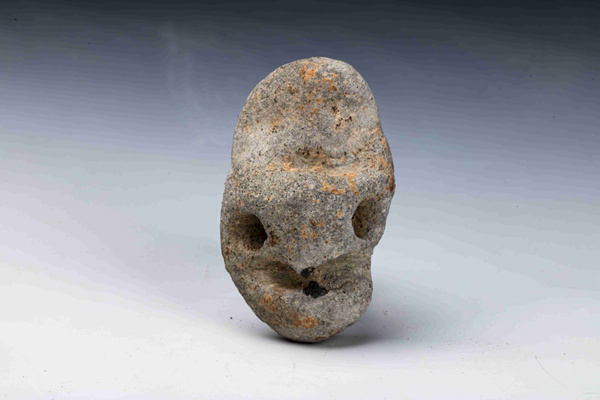
Archaeological excavations at Shangshan sites have unearthed a wealth of artifacts that illustrate the culture's advanced development for its time. Among the most significant findings are carbonized rice grains, considered the earliest examples of cultivated rice in China. Painted pottery vessels, including pots, jars, plates, and bowls, are also prevalent. These vessels, often painted in red and white patterns, provide insight into the daily life and cultural practices of the Shangshan people. Additionally, the ruins of pile dwellings and ground houses have been discovered, indicating the architectural ingenuity of this ancient civilization. The presence of moats and tombs at some sites further suggests a complex social structure with ceremonial and possibly religious significance.
Society and Economy
The Shangshan Culture represents one of the earliest societies to engage in rice agriculture, marking a significant transition from hunting and gathering to settled farming communities. The cultivation and consumption of rice became increasingly prominent over time, as evidenced by the abundance of carbonized rice grains found in middle and late-stage sites. The development of pottery, particularly vessels used for fermentation and storage, suggests that the Shangshan people had developed techniques for brewing and possibly wine production. This technological advancement reflects an economy based not only on agriculture but also on the production of value-added goods. The presence of tombs and ceremonial sites indicates a structured society with complex social and religious practices.
Cultural Significance
The Shangshan Culture is celebrated for its role in the early development of rice agriculture in China, a practice that has had a profound and lasting impact on the region's civilization. The culture's advancements in pottery and agriculture reflect a society that was pioneering in its approach to utilizing natural resources and developing new technologies. Furthermore, the discovery of rice beer brewing provides insight into the cultural and social activities of the period, suggesting that alcoholic beverages played a role in ceremonial feasting and social gatherings. The Shangshan Culture's contributions to early human settlement patterns and agricultural practices underscore its importance as a foundational culture in the history of Chinese civilization.
Preservation and Study
Efforts to preserve and study the Shangshan Culture are ongoing, with archaeological research continuing to uncover new sites and artifacts. The Huangchaodun Site in Quzhou, for example, has recently revealed remnants of settlements and what is possibly the earliest rice field ever discovered, adding to the understanding of Shangshan agricultural practices. Plans are underway to establish a museum dedicated to Shangshan Culture. These initiatives underscore the significance of the Shangshan Culture in the broader context of China's cultural heritage and its contributions to the development of early human societies.








